With microwave plasma, we connect circular resources and industrial transformation. Explore our solutions ↗
MICROWAVE PLASMA TECHNOLOGY
From waste to hydrogen. From emissions to transformation.
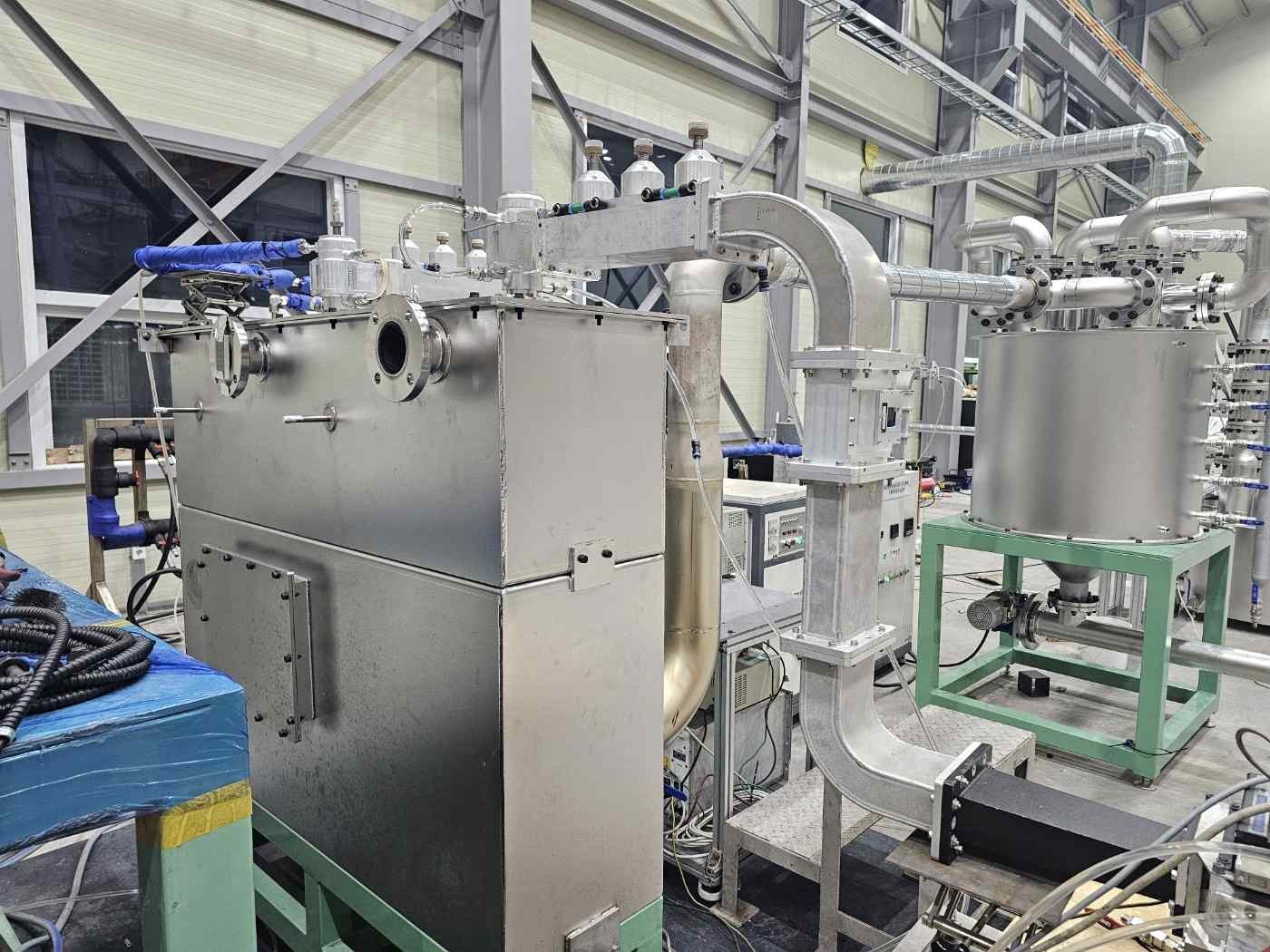
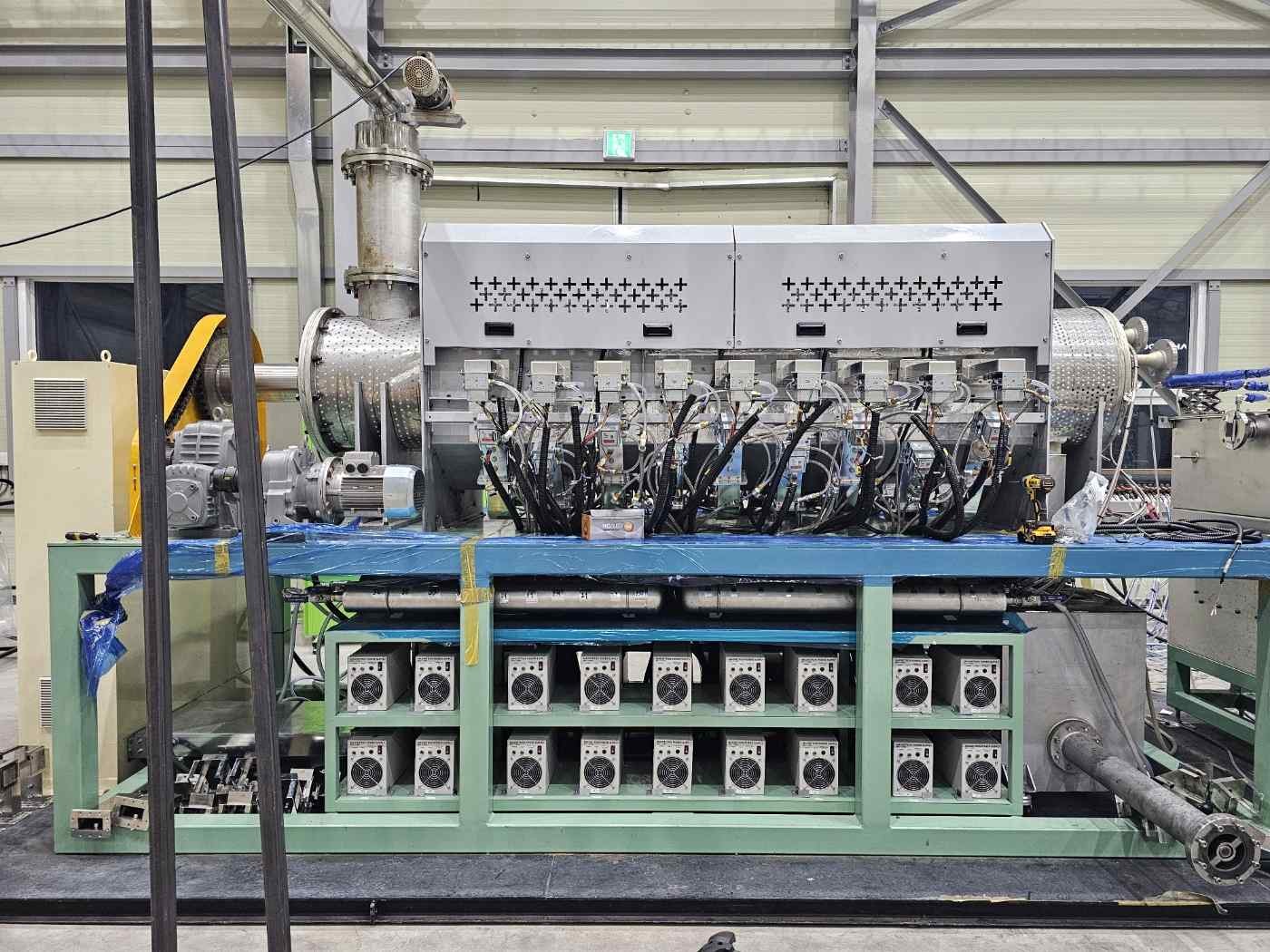
Microwave plasma reformer shown in the supplied process documentation
01 RESOURCE RECOVERY02 GAS TREATMENT03 SMART ENERGYPETRA CLIMATE TECHNOLOGY
ABOUT PETRA
Built on technology. Designed for circularity.
PETRA Climate Technology Co., Ltd. develops resource recovery and industrial exhaust treatment solutions based on microwave plasma technology.
Our business focuses on modular systems that convert waste tires into hydrogen and recovered carbon materials, alongside electric systems for manufacturing exhaust treatment. We evaluate equipment and operating data together to develop site-specific applications.
CircularRecovering resource value
ElectricElectrifying process heat
ModularScaling through modules
OUR SOLUTIONS
Two solution areas. One sustainable direction.
From resource recovery to industrial environmental systems. Expanding the applications of plasma technology.
01 / RESOURCE RECOVERY
Waste Tire Resource Recovery
We combine microwave pyrolysis and plasma reforming to recover carbon and hydrogen from waste tires. Hydrogen and recovered carbon black are prioritized for validation, with advanced carbon materials considered as further development opportunities.
Our system concept integrates electric MW plasma, steam-assisted reactions, heat recovery and downstream treatment. Configurations are evaluated for semiconductor, display and other industrial exhaust applications.
THC / VOC treatmentGas-specific designSmart power control
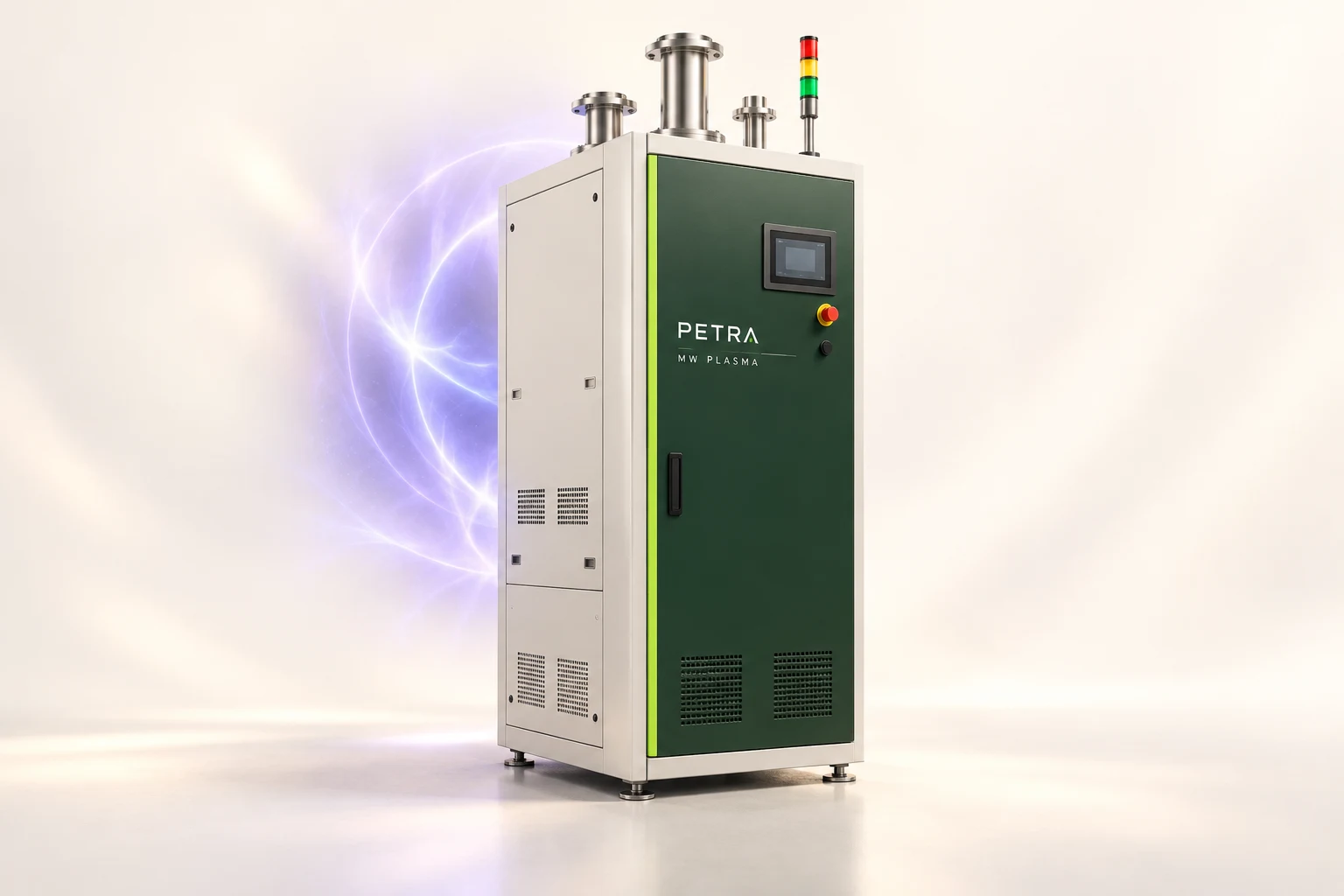
Scrubbers treat harmful constituents in manufacturing exhaust. PETRA’s exhaust treatment system applies our specialized microwave plasma technology. Its design integrates electrodeless energy delivery with the reactor, steam supply, heat recovery, downstream treatment and operating controls.
Semiconductors & displaysTHC / VOC exhaustFluorinated gas applicationsEquipment retrofits
Equipment exterior concept. Actual construction specifications and internal layout may differ.
PETRA SPECIALIZED TECHNOLOGY
At the core: microwave plasma.
Microwave energy is delivered to the plasma reaction zone to promote decomposition of process exhaust gases. Energy delivery, gas-specific reaction conditions and downstream treatment are considered as one integrated system.
01Electrodeless microwave energy delivery
02Steam reactions, gas mixing and residence-time design
03Integrated heat recovery, post-treatment and power control
FAB INTEGRATION / APPLICATION CONCEPT
Close to the process. Connected through MW plasma treatment.
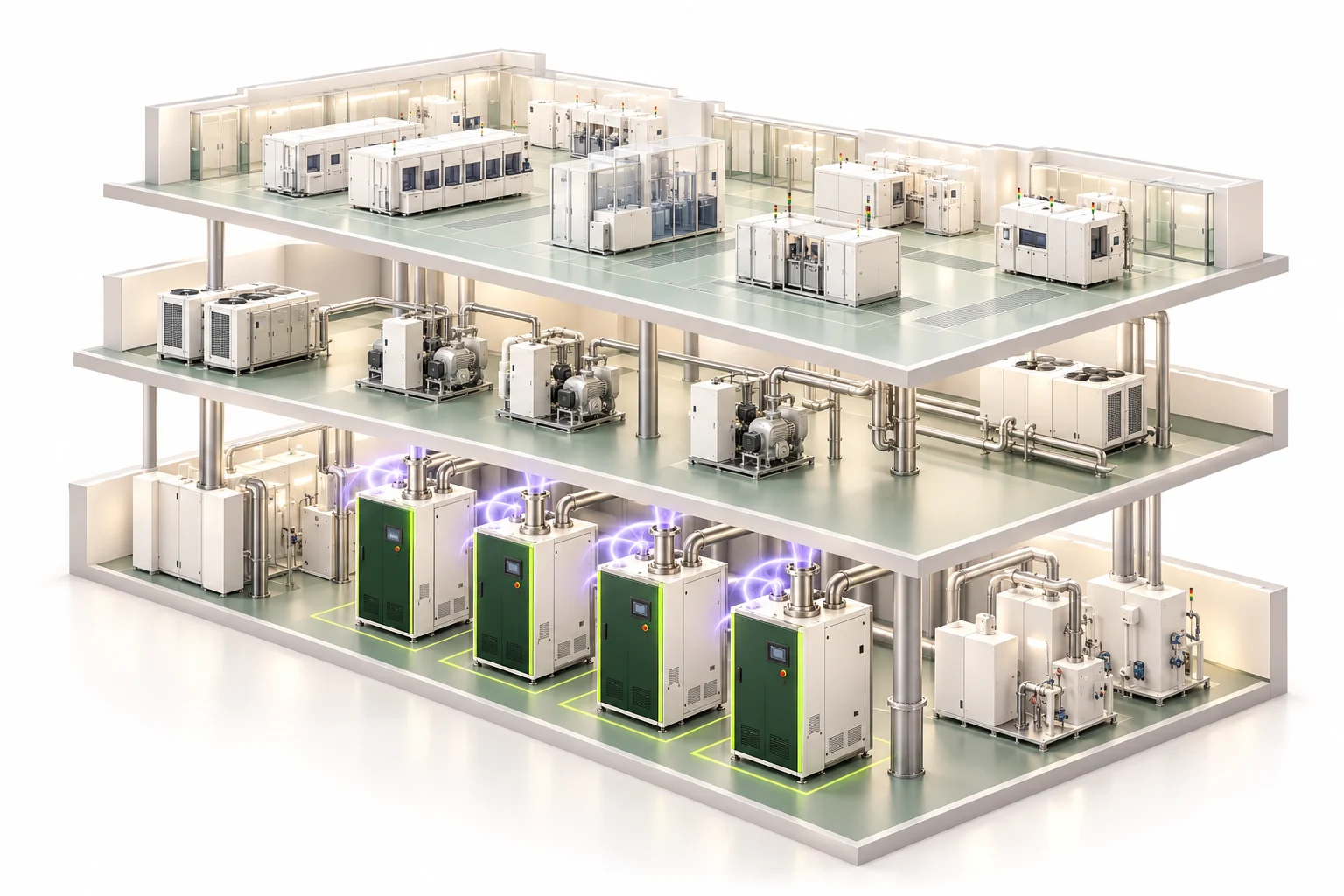
Cleanroom process equipment is linked with vacuum and utility systems below. The application location of PETRA MW plasma scrubbers is configured around the exhaust flow.
Illustrative fab application concept, not an actual customer layout or installation. Violet light is an artistic representation of plasma energy.
01 / CLEANROOMWafer process equipment / exhaust sources
02 / SUB-FABVacuum pumps / temperature control / auxiliary systems
03 / GAS TREATMENTPETRA MW plasma scrubbers / downstream treatment
Process toolsEtch / CVD and more Process exhaust generation
→
Vacuum pumpsMaintaining process vacuum Exhaust transfer
→
PETRA MW ScrubberMicrowave plasma Gas decomposition / reaction control
Temperature control for process tools and cooling requirements for scrubbers are evaluated separately. Utility connections follow equipment specifications, with cooling status included in operating safety and interlock design.
POINT-OF-USE INTEGRATION
Exhaust treatment connected to the source
The MW plasma system is configured around gas flow after the vacuum pump, exhaust pressure and available space. Downstream scrubbing, capture and central exhaust connections depend on gas characteristics.
Conceptual flow illustration. Installation locations, piping and downstream equipment vary by project.
01 / HOW IT WORKS
Decompose. Capture. Monitor.
STEP 01
Inlet conditioning
Gas composition, flow, concentration and pressure are assessed. Steam and other reaction-supporting fluids are configured for the target gas.
STEP 02
MW plasma decomposition
Microwaves from the generator are transmitted through a waveguide. The plasma reaction zone promotes decomposition of organic exhaust constituents and other applicable gases.
STEP 03
Reaction & thermal management
Gas mixing and residence time are managed alongside reactor heat exchange. Cooling and quenching are configured to suit gas characteristics.
STEP 04
Wet treatment & particle capture
Acidic constituents and particulate byproducts are treated through water, chemical scrubbing and collection systems. Wastewater and sludge management are included in the design.
STEP 05
Monitoring & operating records
Inlet and outlet gas data are reviewed alongside power, pressure, cooling and alarms. Treatment performance and energy use are recorded over time.
Illustrative process configuration. Reaction-supporting fluids, quenching and downstream treatment are selected for each target gas.
02 / REACTOR ENGINEERING
Inside the PETRA MW system design.
Electrodeless energy delivery
The microwave generator, waveguide, plasma generation zone and reactor are integrated. The design aims to reduce discharge-electrode wear and replacement, while quartz components, the reactor and cooling systems still require maintenance.
Preheating & swirling flow
Heat around the reactor is used to preheat incoming gas. Tangential entry creates swirling flow, supporting gas mixing, residence time and contact with the reaction zone.
Steam-assisted reactions
The THC treatment concept supplies steam to the plasma reaction zone to utilize reactive species such as OH radicals. Steam input, power and reaction conditions are adjusted for gas type and load.
Heat recovery & on-demand operation
Heat recovery and electric power control are combined to improve energy utilization. For standby and backup systems, startup characteristics are considered when evaluating ways to reduce idle operating requirements.
03 / GAS-SPECIFIC CONFIGURATION
Different gases. Tailored configurations.
Application area
Treatment approach
Key design & evaluation factors
THC·VOCs Organic exhaust gases
MW plasma combined with steam-assisted reactions, heat recovery and downstream treatment
Inlet concentration changes, flow, mixing, residence time, residual organics and byproducts
NF₃ / SF₆ and others Fluorinated process gases
Gas-specific power and reaction settings, with downstream capture of acidic constituents
Gas-specific destruction efficiency, corrosive byproducts, downstream loading and material compatibility
CF₄ and others Hard-to-decompose gases
Integrated assessment of reaction settings, supporting fluids, residence time, quenching and downstream treatment
Performance at actual treatment flow, energy per unit throughput and reaction stability
Wet scrubbing, capture and particle collection configured for the gas-treatment system
Outlet concentration, pressure drop, scrubbing water, wastewater, sludge and serviceability
THC and fluorinated gases require different operating conditions. Equipment configuration and treatment settings are defined for each target gas.
04 / TECHNOLOGY COMPARISON
Understand the technologies. Choose on clear criteria.
Technology
Basic configuration
Operating considerations
Burn-Wet
High-temperature fuel combustion followed by wet treatment
Fuel and air supply, preheating, standby operation, combustion emissions and downstream load
DC plasma
Plasma generated by a direct-current arc
Electrode wear and replacement, arc stability, cooling and maintenance
RF plasma
Plasma generated by a radio-frequency electromagnetic field
Matching systems, coil and dielectric structures, pressure changes and deposition control
MW plasma
Electrodeless plasma generated using microwaves
Reflected power, quartz and reactor durability, gas-specific tuning and long-term operation
Technology selection depends on gas type, flow and site conditions. Destruction efficiency is assessed alongside energy, byproducts, availability and maintenance costs.
05 / SMART OPERATION & SERVICE
Turning equipment performance into operating value.
Load-based power control
Gas flow, concentration and process status inform power adjustments within an approved operating range. The objective is to manage energy in response to changing loads rather than relying solely on fixed output.
Safety interlocks & operating history
The proposed configuration monitors cooling water, exhaust pressure, power, gas supply and reflected power. Alarms, safe shutdown procedures and event records are linked to abnormal conditions.
Inspection, parts & module service
Quartz components, the reactor, cooling systems, scrubbers and piping are inspected. Spare-parts plans and replacement procedures consider site access and maintenance needs.
Total operating cost & carbon management
Electricity, fuel, water, consumables, wastewater, maintenance and downtime are assessed together. Carbon impacts of electrification include electricity use and grid emission factors as well as fuel savings.
06 / PROJECT DELIVERY
A deployment process grounded in site conditions.
Process assessment → application design
Target gases, normal and peak flows, concentration changes, exhaust pressure and available space are reviewed. Reactor configuration, downstream systems and instrumentation are defined around electricity, cooling and scrubbing-water requirements.
Installation & evaluation → phased expansion
After installation and interlock checks, gas-specific treatment, power use, byproducts and operating stability are evaluated. Inspection, training and spare-parts arrangements support decisions on broader application.
Which configuration suits your process?
Share your target gases, flow and concentration ranges, existing equipment and project objectives to prepare an application inquiry.
Technical basis: supplied PETRA MW system business plan and scrubber technology comparison materials. This overview describes system concepts and application directions; supply specifications are defined for each project.
EXPLORE THE PROCESS
How waste tires become resources.
Select a stage to explore its role and connected technologies.
Conceptual process adapted for this website from the business plan and HMPG process documentation.
RECOVERED VALUE
One waste resource. Multiple industrial opportunities.
CORE TECHNOLOGY
Connected technologies for process efficiency.
01
Microwave energy
Electricity-based heating and plasma generation are applied as process energy sources for resource-recovery pyrolysis and industrial gas-treatment reactions.
02
Reforming & downstream purification
Reforming, particle collection and purification are configured for feedstock and gas composition. Hydrogen recovery considers PSA purification; exhaust treatment uses gas-specific downstream systems.
03
Heat recovery & smart control
Heat recovery and load-based control are connected to manage energy use. Power, gas and alarm data support operating-condition adjustments.
FROM PILOT TO SCALE
Validate first. Scale through modules.
STEP 01 / PILOT
Feedstock & process validation
Feedstock characteristics, material balances, power use, gas analysis and product analysis establish the operating basis.
STEP 02 / DEMONSTRATION
Continuous operation & customer evaluation
Operating stability and maintainability are evaluated, alongside sample assessments with hydrogen and carbon-material customers.
STEP 03 / SCALE-UP
Parallel modules & commercialization
Validated processes support modular expansion and site deployment, with operations and maintenance arrangements developed in parallel.
QUESTIONS & ANSWERS
More about PETRA.
How does waste tire resource recovery differ from incineration?
Resource recovery focuses on recovering the carbon and hydrogen in waste tires as products. Pyrolysis, reforming and purification are used to assess hydrogen and carbon-material value, while energy use and emissions management are considered together.
Are graphene and synthetic graphite ready for immediate sale?
The business direction prioritizes validation of hydrogen and recovered carbon black. Graphene and synthetic graphite are expansion areas requiring further purification, processing, quality analysis and customer qualification. Product grades and applications depend on feedstock and process conditions.
What kinds of partners can work with PETRA?
We seek collaboration with waste tire suppliers, hydrogen and carbon-material buyers, pilot-site operators, accredited testing organizations, industrial exhaust-treatment customers and strategic investment partners.
What applications are considered for the scrubber business?
We evaluate THC / VOC exhaust and semiconductor process-gas applications. Reactors and downstream systems are configured for target gas composition, flow, concentration and site utilities.
LET’S BUILD WHAT’S NEXT
Build the next circular chapter. Together.
From feedstock supply and product demand to equipment and strategic partnerships. Tell us your objectives and site conditions.
Prepare an inquiry draft below and save it as a file. It will not be sent externally before a contact channel is connected.